
How old is that kitten?
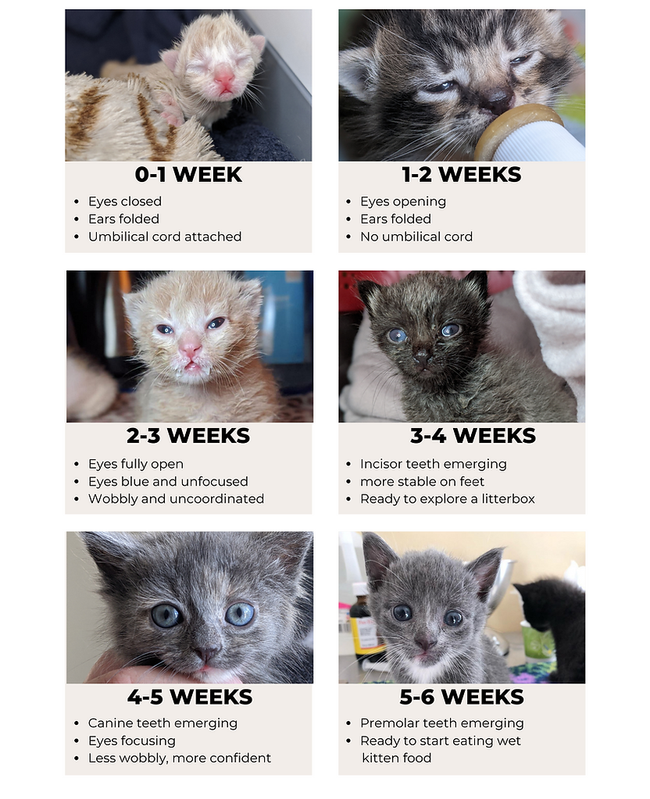
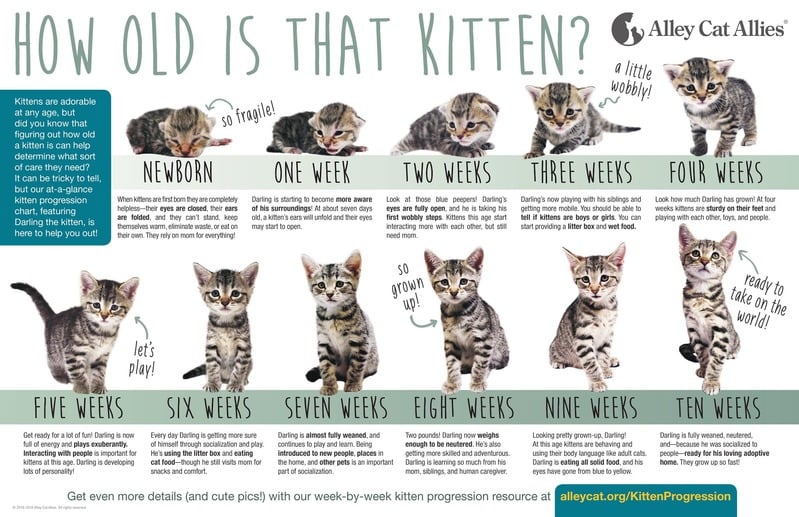
A kitten’s age determines almost everything about its care — whether it needs bottle feeding, how often it eats, and when it’s ready for spay/neuter surgery. Use the milestones below to estimate age, then match it against the detailed progression chart.
- 0–1 week: Eyes closed, ears folded, umbilical cord may still be attached.
- 1–2 weeks: Eyes beginning to open, ears still folded.
- 2–3 weeks: Eyes fully open (blue and unfocused), wobbly on their feet.
- 3–4 weeks: Incisor teeth emerging, more stable, ready to explore a litterbox.
- 4–5 weeks: Canine teeth emerging, eyes focusing, more confident.
- 5–6 weeks: Premolar teeth emerging, ready to start eating wet kitten food.
Is it a boy or a girl?
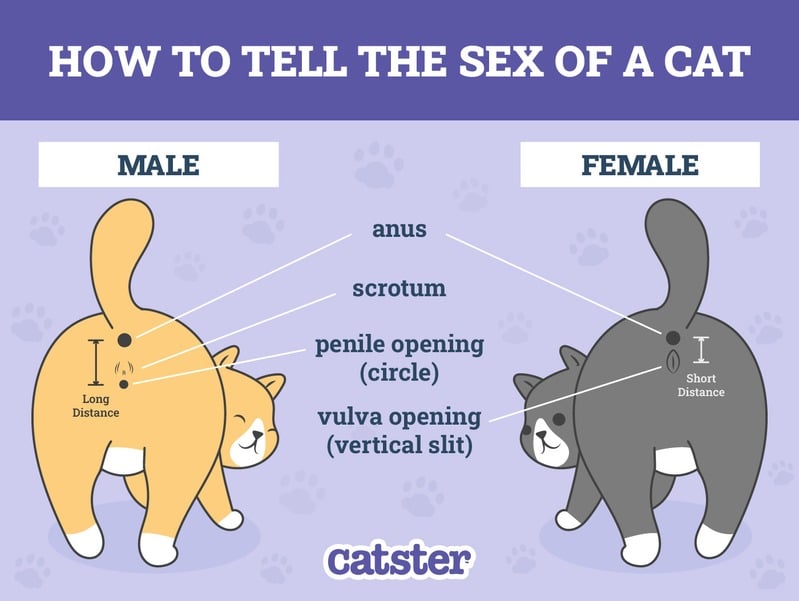
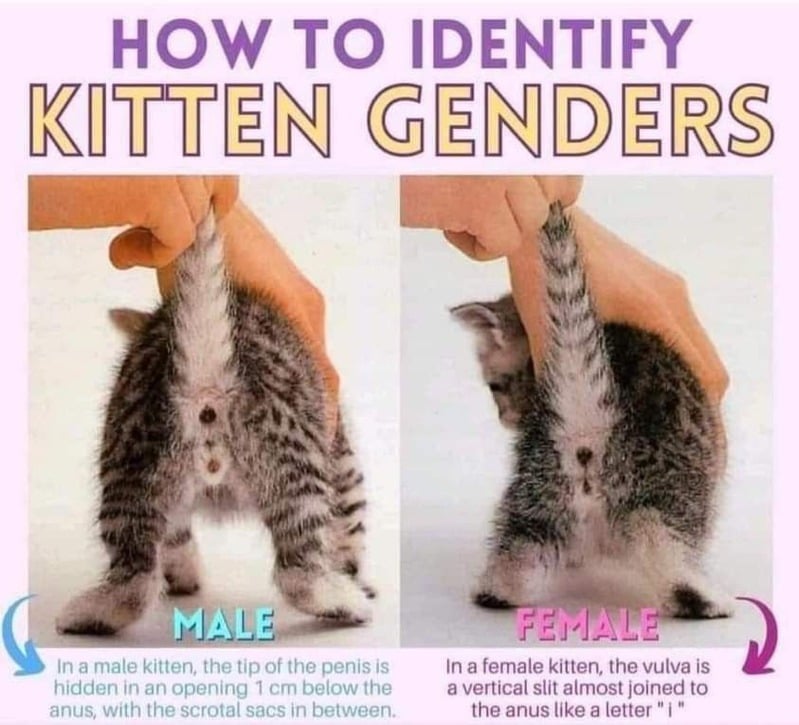
Determining sex can be tricky, especially with very young kittens. The key is the distance between the anus and the genital opening — it is longer in males and shorter in females. The diagrams below make it easier to compare.
When in doubt, don’t stress — a veterinarian will confirm sex at the spay/neuter appointment. If you’re raising a litter and need help, please reach out to us.